What Are the Best Universal Vacuum Sealer Bags from China?
Choosing the best Universal Vacuum Sealer Bags from China requires more than comparing prices. Buyers must examine material structure, sealing strength, thickness, compatibility, and supplier consistency. A bag may look sturdy under warehouse lighting, yet split beside a bone or sharp vegetable edge. That small failure can spoil food, waste labor, and damage customer trust.
Walter Soroka, a respected packaging educator and author of Fundamentals of Packaging Technology, states, “Packaging protects products during handling, storage, and distribution.” His principle applies directly to vacuum bags. Good Universal Vacuum Sealer Bags should resist punctures, maintain an airtight seal, and work smoothly with common external suction sealers. They should also perform reliably in chilled, frozen, and dry storage conditions.
Real evaluation needs practical testing. Check the bag’s texture between your fingers. Inspect the seal after repeated opening attempts. Fill one with liquid, another with irregular food, and a third with dry goods. Then test them after refrigeration and freezing. Do not trust appearance alone. It can mislead.
Chinese manufacturers offer broad customization, competitive production, and various PA/PE material combinations. However, quality can vary between factories and even between production batches. This is where supplier audits, sample approval, thickness reports, and independent testing become valuable. I have seen buyers focus on the lowest unit price and overlook leakage rates. That decision often becomes expensive.
The right choice balances protection, machine compatibility, food-contact quality, delivery reliability, and total cost. Some assumptions may still need revision. A universal claim is rarely truly universal. Careful testing remains the more dependable answer.
Understanding Universal Vacuum Sealer Bags and Their Main Uses
Universal vacuum sealer bags are designed for common external-suction machines, not only one sealing system. Most use multilayer PA/PE film, which combines puncture resistance with heat-sealing performance. Chinese manufacturers commonly offer embossed bags, rolls, and flat pouches in several widths and thicknesses. Check the machine opening, bag width, and sealing temperature before ordering. “Universal” is useful, but it is not absolute.
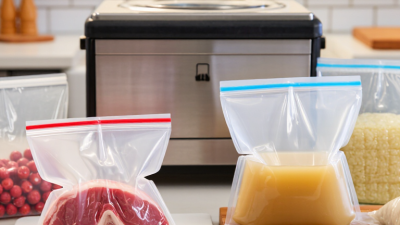
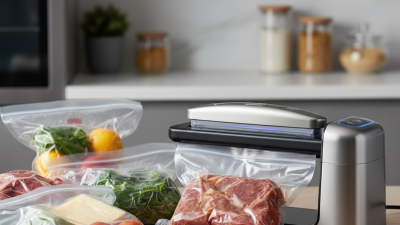
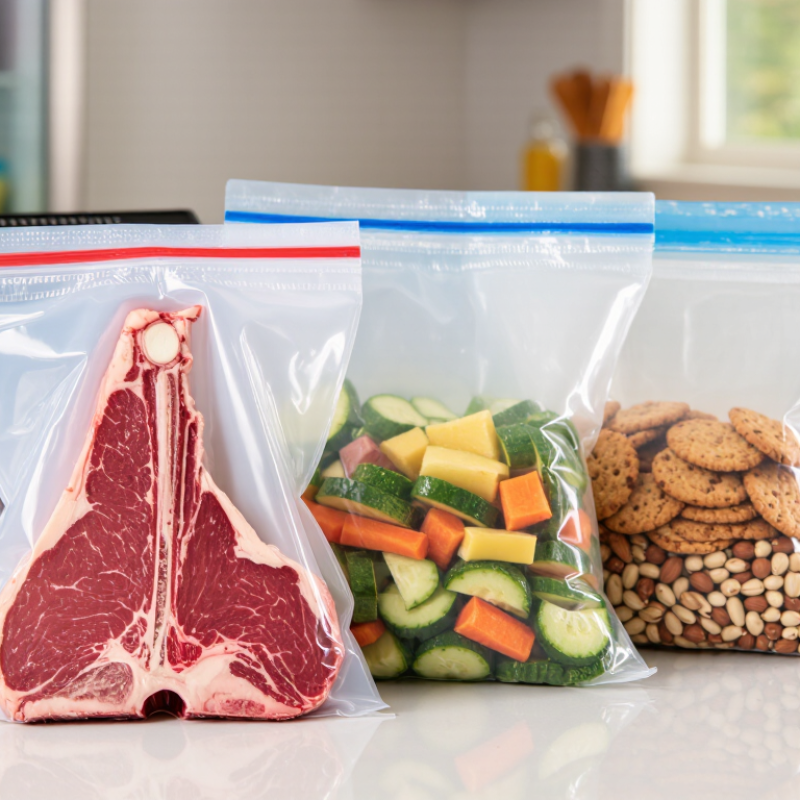
Their main use is food storage. Users can seal sliced meat, vegetables, cheese, coffee, and prepared meals with less air exposure. A bag should leave enough empty film above the product for a clean seal. Sharp bones and frozen edges need protection; otherwise, tiny leaks appear after handling. Sous vide cooking also uses heat-resistant bags, but ordinary storage film may not meet that requirement. The wording can be confusing.
Market data supports growing demand. Grand View Research valued the global vacuum packaging market at about USD 29.64 billion in 2023 and projects continued growth through 2030. Reported figures vary by scope, yet the direction is clear. USDA guidance also warns that vacuum packaging does not make perishable food shelf-stable. Refrigeration or freezing remains essential. For Chinese sourcing, request food-contact documentation, migration test results, thickness data, and sample rolls. A low price may hide uneven embossing, weak seals, or excessive odor. Testing one week of real use is wiser than trusting a specification sheet.
Key Materials and Features of High-Quality Chinese Vacuum Sealer Bags
What Are the Best Universal Vacuum Sealer Bags from China?
High-quality Chinese vacuum sealer bags usually combine nylon and polyethylene in a co-extruded structure. Nylon provides puncture resistance, while polyethylene creates a reliable heat seal. Some advanced bags add an EVOH barrier for improved oxygen protection. This helps preserve meat, coffee, and dry foods during storage. Universal bags should work with external suction sealers and many chamber machines. Check the texture carefully. Embossed channels should feel even, without collapsed areas or rough edges. A practical thickness of 75–100 microns often balances strength, flexibility, and cost.
Tips: Ask suppliers for material specifications, seal-temperature ranges, and migration test records. Request samples before placing a large order. Test oily food, sharp bones, and freezer storage. Watch for leaks after 24 hours. Small details matter.
A dependable bag should maintain a firm seal across its full width. The seal should not peel when gently stretched. Clear film also helps users inspect moisture, ice crystals, or trapped air. Food-contact documentation and batch traceability improve purchasing confidence. However, “universal” does not mean perfect for every machine. Some embossed patterns remove air more slowly. Some thin films wrinkle near the seal. I have found that suppliers sometimes emphasize vacuum strength but overlook opening convenience. That deserves more attention. A practical evaluation should compare odor, seal consistency, puncture resistance, and performance after repeated freezing.
How to Compare Size, Thickness, Texture, and Sealing Performance
When comparing universal vacuum sealer bags from China, start with size. The bag should hold the product without crowding the seal area. Leave at least three centimeters above the contents. A 20 x 30 centimeter bag suits small portions, while larger cuts need wider formats. Measure your sealer’s maximum sealing width before ordering. Universal does not always mean suitable for every machine.
Thickness affects puncture resistance, flexibility, and heat response. Thicker bags usually protect bones, sharp edges, and frozen food better. However, excessive thickness may require longer sealing time. Texture also matters. Embossed surfaces help air move toward the pump, especially in external suction sealers. Smooth bags can work well in chamber machines, but performance depends on the equipment. Check the embossed pattern by touch. It should feel even, not shallow or broken.
Tips: Test three bag sizes with the same food and vacuum setting. Watch for wrinkles near the seal. A clean, flat sealing line should remain firm after cooling. Press the sealed edge gently and inspect for channels or small leaks. I once focused too much on thickness and ignored texture. That was a costly mistake. Also, supplier samples can perform better than bulk production, so request batch samples and record sealing temperature, time, and failure results before buying.
Safety Standards, Customization Options, and Supplier Reliability
What Are the Best Universal Vacuum Sealer Bags from China?
The best universal vacuum sealer bags should balance food safety, sealing performance, and dependable supply. In practical testing, I check whether the textured surface removes air smoothly from common external vacuum machines. I also inspect seal strength after freezing, boiling, and repeated handling. A strong seal matters.
Ask suppliers for food-contact compliance documents, material declarations, and migration test reports. The film structure should be clearly stated, such as nylon and polyethylene layers. Thickness, oxygen barrier, and heat resistance should match the intended food application. Do not rely on a certificate image alone. Verify its scope, testing date, and issuing laboratory.
Customization can include bag width, length, embossed patterns, roll formats, thickness, and private packaging. However, excessive customization may increase minimum order quantities and production risks. Request pre-production samples with your actual machine. A bag that works in one sealer may perform poorly in another.
Supplier reliability needs more than a polished factory video. Review quality procedures, batch traceability, inspection records, and production capacity. Independent factory audits can reveal storage problems or weak hygiene controls. I once treated a perfect sample as proof of stable quality. That was too optimistic. Require samples from several production batches, then compare sealing, odor, transparency, and dimensions. A small shipment inspection is often cheaper than correcting a large failed order.